Published
AI search glossary.
Plain definitions of the terms this discipline uses, including the three that get used interchangeably and should not be.
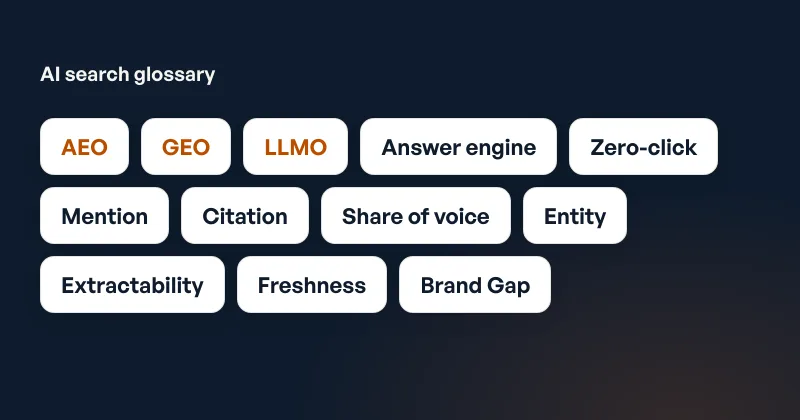
The vocabulary here is young and unsettled, which means a good deal of it is used inconsistently, occasionally by people selling it. These are the definitions we use, and where the industry genuinely disagrees, we say so instead of picking a side quietly.
The three that get confused
AEO, answer engine optimization
The work of making your business the source an AI system cites when it answers a customer’s question. Traditional search optimization competes for a position in a list of links. AEO competes to be inside the answer itself.
We use AEO as the umbrella term, because our own methodology, scoring rubric and service tiers are built around it. The long version is here.
GEO, generative engine optimization
The same discipline under a different name. GEO emphasises that the systems generate an answer rather than retrieve one, which is a real distinction about the technology and not a real distinction about the work.
AEO and GEO are used interchangeably across the industry and neither has won. Anyone who tells you they are different disciplines is describing a preference. We use AEO consistently for internal coherence, not because GEO is wrong.
LLMO, large language model optimization
A third name for substantially the same work, framed around the models rather than the interface. Less widely used than either AEO or GEO. It occasionally carries a narrower meaning, referring specifically to how a brand appears in a model’s underlying training data rather than in the live retrieval that most answers actually draw on, which is a distinction worth knowing about because the two are influenced very differently.
The surfaces
Answer engine
Any system that responds to a question with a composed answer rather than a list of results. ChatGPT, Perplexity, Gemini, Copilot, and Google’s own AI features are all answer engines. The term is useful precisely because it spans products from different companies that behave similarly.
Google AI Overviews
The AI-written summary at the top of a normal Google results page, above the organic links. It appears automatically, on 48% of all Google queries (SE Ranking and SeoProfy, 2026), and nobody opts into it.
Google AI Mode
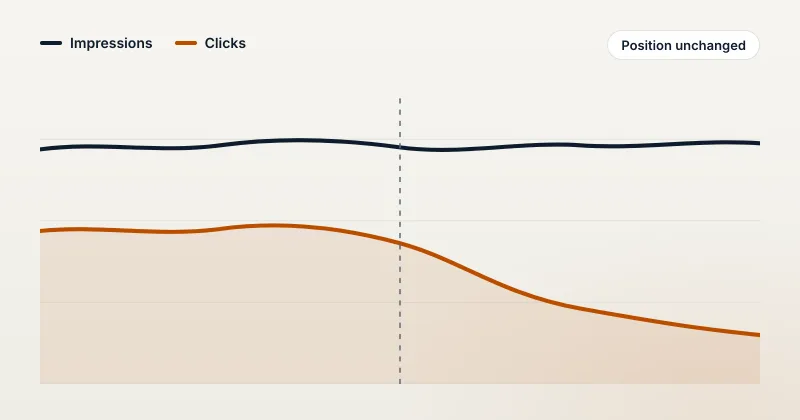
A separate conversational interface from Google, entered deliberately, where the user has a back-and-forth rather than a search. It ends 93% of its sessions with zero clicks to any website (Semrush, 69 million sessions, 2026).
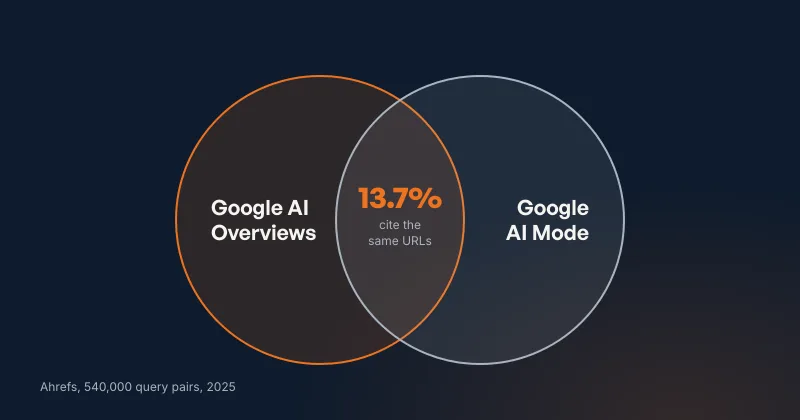
Google AI Overviews and Google AI Mode are two different surfaces, and they cite the same URLs only 13.7% of the time (Ahrefs, 540,000 query pairs, 2025). Why that matters, at length.
Zero-click
A search or conversation that ends without the user visiting any website. The question was answered where it was asked. It is a description of user behaviour, not a penalty or a setting.
The measurements
Mention
Your business name appearing in an AI answer with no link attached. It builds recognition and sends nobody directly, and your analytics record nothing at all.
Citation
A clickable link to your site inside an AI answer. Somebody can follow it, and your analytics will record them when they do.
Mentions and citations are not the same event and they are measured separately. Only 23.1% of AI brand mentions include a citation back to that brand’s domain (BuzzStream, 12,000 AI responses, 2026), which is why a business can be gaining ground in AI answers while its dashboard shows nothing.
Share of voice
How often you are named, compared with named competitors, on an identical set of questions. Measured per surface rather than blended, because two surfaces can give completely different answers about the same business and one average would hide the thing you most need to see.
Mention rate and citation rate
The share of answers in which you are mentioned, and the share in which you are cited. Tracked separately because the gap between them tells you what to fix: a high mention rate with a low citation rate points at your own site, and a low mention rate points off-site.
Sentiment and accuracy
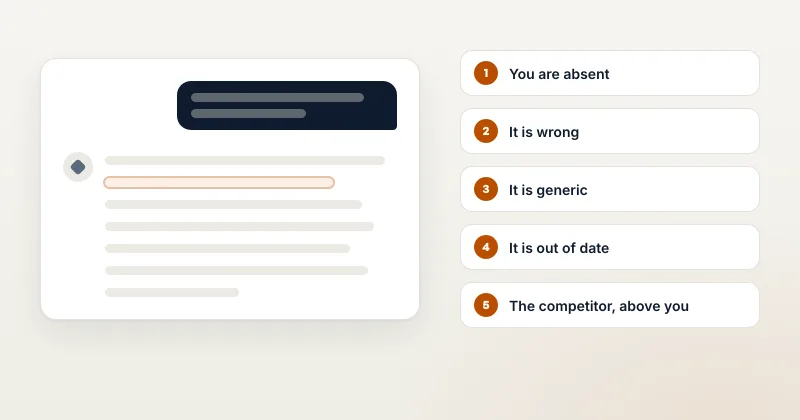
Whether what is said about you is correct, and how it makes you sound. Accuracy covers wrong service lists, wrong locations, outdated descriptions and services you no longer offer. Sentiment covers tone and positioning relative to competitors. Inaccuracies are usually the cheapest thing to fix and the most expensive thing to leave.
The building blocks
Entity
The machine-readable identity of your business: who you are, what you do, where you operate, and what you are called, stated consistently everywhere a system might look.
Entity work is unglamorous and it is the foundation of everything else here. When the facts about a business are inconsistent across its site, its Google Business Profile and the directories it appears in, AI systems start hedging or inventing, and that is a direct cause of wrong answers about a business.
Structured data, or schema
A statement in a page’s code that describes what the page and the business are, in a format designed to be read by machines rather than people. It does not change what a visitor sees. It changes how confidently a system can state a fact about you.
Extractability
Whether a section of a page can be lifted out and quoted as a complete answer. A section that leads with its answer and then supports it is extractable. A section that builds to its conclusion in the fourth sentence usually is not, no matter how well written.
Freshness
How recently content was published or meaningfully updated. It carries unusual weight in this discipline: 50% of AI citations come from content published or updated within the last 13 weeks (Amsive, 2025).
Prompt set, or question set
The fixed list of questions used to probe answer surfaces during a measurement. Locking it is what makes a later rerun a comparison rather than a fresh opinion, and it is the single most important methodological choice in an audit.
Brand Gap
The distance between how AI systems currently describe a business and how it needs to be described. We measure it across six dimensions: visibility, narrative, topic, format, web mentions, and demand.
Terms we avoid, and why
“Ranking” in ChatGPT
There is no ranking. There is no position one. An answer engine composes a response from sources it selects, and the selection varies between runs of the identical question. Anyone selling you a rank in ChatGPT is describing something that does not exist. What can be measured is how often you appear across repeated runs, which is why runs are repeated.
“Guaranteed placement”
Nobody controls these outputs. What can be sold is a measurement, a fix list, and a rerun that shows what moved.
“Google AI”
Used as a single thing, it collapses two surfaces that agree on sources roughly one time in seven. If a report gives you one number for Google AI, it measured one of them.
Two fields, one page back within two business days, scored against the same five pillars these terms come from.